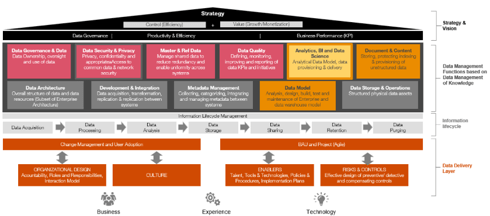
The programme aim at transforming South Africa’s mining sector through the integration of smart, connected systems and real-time data orchestration. Its core mission is to deliver “the right information, to the right people, at the right time” by addressing key industry challenges such as safety, productivity, digital transformation, and sustainability. Through collaboration it fosters to modernize mining operations using IIoT technologies, open-source platforms, and standardised frameworks and architectures. It supports the development and deployment of innovative technology enabling data-driven decision-making, enhanced situational awareness, and improved operational efficiency across diverse mining environments.

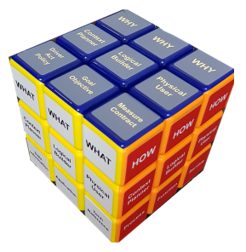
Capability Development provides the “how” through enhanced skills, robust processes, and the strategic adoption of technology. This work package is fundamentally about empowering the mine’s ability to effectively utilize and manage real-time information.
Technology Solutioning provides the essential "what" – the means and the tools necessary to bring these capabilities to life.
In any transformative initiative, understanding the “why and how” is crucial for success. This is precisely the purpose of Strategic Co-Creation and Value Extraction.This work package focuses on ensuring that our efforts in RTIMS not only deliver technological solutions but also generate clear business outcomes and demonstrable value.






Work Package 1 (WP1): Capability Development provides the “how” through enhanced skills, robust processes, and the strategic adoption of technology. This work package is fundamentally about empowering the mine’s ability to effectively utilize and manage real-time information.
WP1 is focused on enhancing the mine’s internal capacity, ensuring that the organization, its people, and its operational methods are ready to fully leverage the power of RTIMS. This involves a comprehensive approach to building the necessary skills, refining processes, and integrating technology to efficiently capture, process, analyze, and act upon real-time data.
In essence, WP1 is about the people and processes that allow the mine to fully leverage the advanced technology. It’s about creating the organizational capacity to achieve the desired outcomes through the strategic use of real-time information, ultimately ensuring that the investment in RTIMS translates into tangible improvements for mining operations in South Africa.
Digital Twin Consulting Services
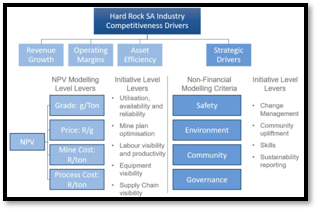
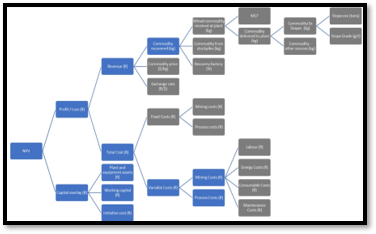
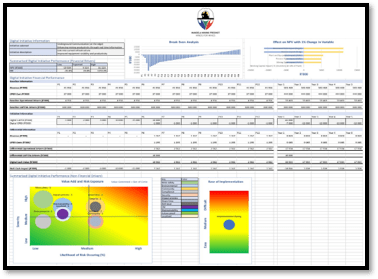
The Digital Twin Business Case Validation Tool empowers mining organizations to make data-driven, strategic decisions by providing a comprehensive framework for evaluating digital transformation initiatives. By integrating both financial (e.g., NPV, IRR, Capex/Opex) and non-financial (e.g., risk exposure, value-add) metrics at both initiative and portfolio levels, the tool enhances prioritization, optimizes resource allocation, and supports executive-level decision-making. Its flexible, Excel-based design ensures real-time analysis and adaptability, paving the way for scalable, site-specific implementation and continuous value tracking.
The Digital Twin Business Case Validation Tool is an Excel-based framework. It evaluates digital initiatives based on MMP-mandated criteria such as interoperability, rapid deployment, local manufacturing, and real-time capability. The tool is tailored for hard rock, underground mining environments targeting platinum and gold, and accommodates various mining methods. It assesses initiatives across four focus areas: safety performance, cost optimization, socio-techno contribution, and environmental responsibility. With capabilities for both initiative-level and portfolio-level analysis—covering financial metrics like NPV and IRR, as well as qualitative assessments—the tool enables comprehensive, real-time validation and prioritization of digital transformation efforts.
Additional information
Links: https://www.digitaltwin.digital/rtimsdigitaltransformationproject
https://mandelaminingprecinct.org.za/business-case-validation-tool/
Project Objective
The RTIMS (Real-Time Information Management System) initiative aims to revolutionize underground hard rock mining by leveraging digital transformation. Through real-time data collection, advanced analytics, and predictive insights, the initiative enhances safety, efficiency, and productivity while ensuring to deliver a return on investment.
Project Scope
This project focuses on integrating RTIMS solutions into underground mining operations, covering:
Edge/IoT device deployment for real-time monitoring
Data management through cloud-based storage and analytics
Business intelligence & analytical applications for performance improvement
Data organisation, change management, and establishing security requirements
Project Key Features
Optimised Drilling Performance
Real-time tracking of drill start times, operating hours, and idle time optimisation.
Optimised Stope Advancement
Lidar-based mapping for accurate face advance monitoring.
Workforce Tracking
Tagging solutions for improved time-in and time-out efficiency.
Improved Cleaning Processes
Monitoring and identifying gulley winch performance challenges for debottlenecking and improvement.
Safety Enhancements
Real-time dust and gas level monitoring for risk reduction and safety improvement.
Cost Saving and ROI
Minimise operational cost through optimised resources, predictive maintenance, and energy efficiency deliverying an ROI.
Project Financial & Operational Impact
Digital Twin Consulting Services
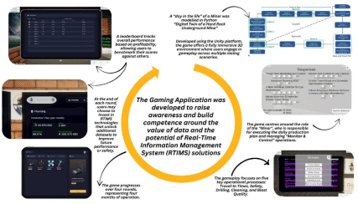
The “DX BC Simulation Gaming Engine” provides an immersive training platform for mining personnel, from front-line supervisors to decision-makers, to build competence and awareness around the value of real-time data from RTIMS technologies. By simulating realistic mining scenarios and operational processes, the game empowers users to make data-driven decisions that enhance safety, productivity, and profitability, ultimately maximizing mine profitability and preparing them for the adoption of RTIMS solutions.
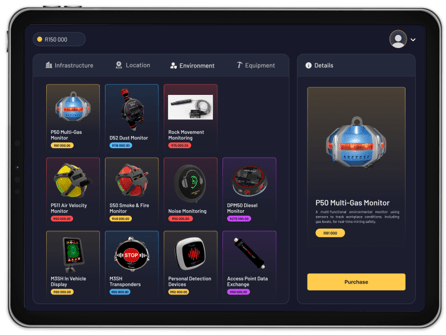
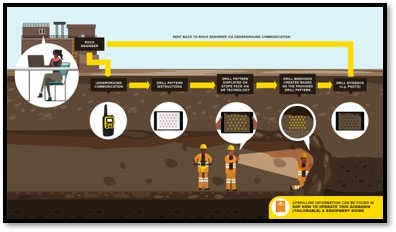
The “DX BC Simulation Gaming Engine” is a Technology Readiness Level 7 (TRL 7) application prototype developed using the Unity platform for training and orientation in mining operations. It provides an immersive 3D environment simulating in-stope processes like drilling, face cleaning, and blasting, relevant to Real-Time Information Management Systems (RTIMS) technology. The game, modeled on a “Miner’s” daily routine, focuses on five key operational processes (Travel-In Times, Safety, Drilling, Cleaning, Blast Quality) and utilizes simulated data sets across three dashboard types (Monitor & Control, Analyse & Improve, Overall Performance) to track KPIs and profitability. Users can invest in RTIMS technologies to unlock datasets and improve performance, with the primary objective of maximizing mine profitability through data-driven decision-making.
CSIR
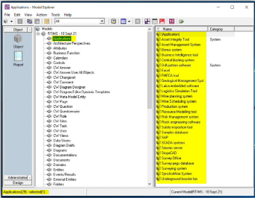
Composing and migrating RTIMS Enterprise Architecture data, models, and web portals from CSIR to the RTIMS application, this project facilitates seamless knowledge transfer and leverages critical information for all RTIMS stakeholders. This ensures enhanced accessibility and utilization of RTIMS EA content, ultimately streamlining information flow and supporting better decision-making within the RTIMS program.
The project involved a methodical migration of RTIMS Enterprise Architecture (EA) data, models, and web portals from CSIR’s EA application suite to the RTIMS CaseWise application and hosting platform. This process included defining the baseline data, exporting and deploying the EA model structure, performing an Extract, Transform, Load (ETL) operation for EA models and objects, and copying/publishing the web portal structure. The primary deliverables were the migrated EA model structure, EA model data, web portal publication, and a comprehensive migration report, with virtual engagements mitigating COVID-19 related access limitations.
Stellenbosch University/ Cybarete
Modern mining operations face a critical disconnect between 21st-century IT planning systems and outdated 20th-century OT execution environments—resulting in lost blasts, delayed responses, and safety risks. The BASE automation engine bridges this gap by introducing a distributed, agent-based control system that aligns operational execution with digital mine plans. By assigning intelligent resource agents to machines, materials, people, and spaces—and activity agents to business processes . BASE enables real-time coordination, situational awareness, and adaptive control. This fractal control hierarchy ensures that resources are dynamically drawn to the tasks that need them, eliminating inefficiencies and enhancing safety, compliance, and productivity in highly transient mining environments
The BASE automation engine introduces a distributed, agent-based control system that bridges the gap between modern IT mine planning and outdated OT execution. Designed for highly transient underground environments, it enables true Short Interval Control by guiding operations directly at the stope—without requiring network or power infrastructure. Using a compact, portable unit, BASE delivers last-mile intelligence, real-time safety and exposure monitoring, and seamless data capture in unconnected zones. Each machine, material, person, and space is assigned a resource agent, while business processes are managed by activity agents, forming a dynamic, fractal control hierarchy. This architecture ensures optimized shift handovers, situational awareness, and the ability to run custom applications in the field—transforming invisible processes into actionable intelligence and aligning execution with mine plans at scale
PwC
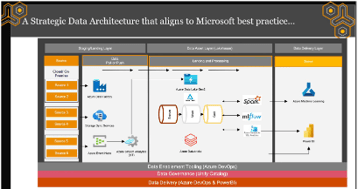
This project aims to transform data into a dynamic and valuable asset for the mining industry by implementing a Data-as-a-Service (DaaS) model at a pilot mine. This significantly lower the barrier to entry and cost of data projects, providing a global best-practice solution tailored for South African mining. By standardizing basic mining data functionality and enabling the integration of diverse data sources, the DaaS model will prevent technological silos and expedite critical processes, such as quickly gathering information in an accident scenario. Ultimately, this approach will unlock invaluable insights through analytics, allowing data to be captured once and reused across myriad applications for exponential impact on safety, productivity, and profitability, positioning mines to proactively address future challenges and drive industry-wide innovation.
This project establishes a Data-as-a-Service (DaaS) model at a test mine, which includes developing a DevOps Delivery Methodology that will enable rapid development and operationalization of data architecture, ultimately maximizing data value for improved safety, productivity, and profitability by facilitating data reuse across myriad applications.
Minserv (originally developed by Esri South Africa and the CSIR using ArcGIS software)
The development of new applications and the sharing of industry expertise in the mining sector faces challenges due the underutilisation of large datasets. Only a portion of acquired data is converted into useful information for decision-making and currently, systems are isolated and not integrated for IIoT in mining. Furthermore, there are gaps in data usage capability at the operator, technical, professional, and managerial levels. RTIMS provided a technology solutioning (and technology transfer) initiative, through ODAP.
Open Data Analytics Platform (ODAP), as described in the ODAP 2021 – 2022/3 reports, is a platform that aims to harmonise, organise and analyse large quantities of real time data. ODAP is a multi-year project and an important step in working towards the ‘Digital Mine’ and ultimately – an ‘Autonomous Mine’. Although ODAP is a collaborative creation of RTIMS, TSC and Minserv, it is facilitated by Minserv. Minserv aims to coordinate the development, implementation, and usage of ODAP in the South African mining sector. This coordination intends to help the makers develop their prototype and assist RTIMS to become the mining sector’s go-to portal.
Its success will be determined by firstly, how well its use cases are integrated with the Mining Value Chain (MVC) activities and processes captured on the RTIMS EA Portal, and secondly, the extent of industry uptake. Because ODAP is a prototype that needs development, it is important to find willing partners to develop use cases. There is also a need for obtaining data sets for ODAP and other RTIMS projects.
ODAP is a data digestive system that can unscramble and organise data for dashboard analysis to get more meaning out of (unrelated) data. It must be seen as a digital assistant to help its users to make better decisions for mine safety and efficiency – as illustrated in Figure 1 below.
Figure 1: Visual Illustration on ODAP and User Collaboration. Source: BetterServ Workshop 1: A Data Diet for Our ODAP Machine (Project initiation), 15 August 2023.
There are several architecture-type diagrams (eg Figure 2 below) available for ODAP in the different milestone reports to date. The figure above illustrates stakeholder collaboration, data sources, integration touch points, analytical models and use case solutions. The system outputs are analytics and visualisation, which functionalities meet the original objectives of the ODAP project.
ODAP is a digital assistant for a human decision-maker and the intention is to develop a technology to convert data into information for wise decisions when this matter.
ODAP was initially intended to be an open-source Digital Companion/Assistant for decision-makers, providing valuable information and standard work processes. However, because ODAP was not developed in open-source software, the meaning of open is understood as – open data, that can flow into, through and out of ODAP
ODAP requires real-time data for functionality, and in exchange for providing time and datasets, mining businesses will gain access to a platform with functionality adapted to their needs, implementation methods, and the production of additional/new insights from acquired data. Longer-term benefits include expanding ODAP’s current focus (value chain operations during the extraction and processing stages of the Mining Life Cycle) to a technological platform that encompasses the full Mining Life Cycle. This will be a huge contribution to the mining sector, develop first-of-its-kind intellectual property, and support the mining sector in constantly adding value over time through fresh insights, analytics, and new use applications.
Problem statement:
The problem it addresses is the underutilization of datasets, where vast industry datasets contain limited data that is transformed into actionable insights for decision-making. Current systems are fragmented and not integrated, making them unprepared for a Mining IIoT. This lack of integration hinders the consideration of new or alternative applications and prevents the discovery of shared industry insights that could benefit the sector as a whole. Additionally, there are gaps in data utilization capabilities at the operator, technical, and professional/managerial levels.
The ODAP platform was initially developed between 2021 and 2023 by Esri South Africa and the CSIR using ArcGIS software under WP 1 (Capability development). From July 2023, Minserv has taken over its further development under WP 2 (Technology development/solutioning).
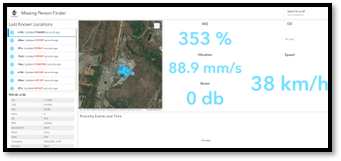
The original goal in 2021 was to create a Digital Analytics Platform (DAP) that harmonizes, organizes, and analyzes large amounts of real-time data. In 2021/2022, the platform’s concept was designed, built in ArcGIS, installed on the MMP RTIMS server, and demonstrated with test cases like “Missing miner” and “Machine health.” The platform’s name was later changed to Open Data Analytics Platform (ODAP), and some analytics were added. In 2022/2023, the focus shifted to further development, including more analytics and use cases.
The ODAP platform, previously known as Digital Analytics Platform (DAP), was originally developed by Esri South Africa and the CSIR using ArcGIS software, to harmonises, organises and analyses large quantities of real-time data. The initial methodology involved the DAP concept design, creation in ArcGIS, installation on MMP RTIMS servers, demonstration of functionality, conceptual design of use cases, test work on two use cases (Missing miner and Machine health) and user manual. After showing success, the intent was to further develop (through the facilitation of Minserv) by including analytics and adding more use cases to the work previously done. Significantly, the platform name changed from DAP to ODAP. The projects within RTIMS which were open, digital, analytical all became contributors of ODAP.
A three-phase approach methodology was followed, focusing on the following:
Phase 1: Understanding ODAP’s past and putting governance systems in place.
Phase 2: Developing an Action Plan for approval by the TSC.
Phase 3: Implementing the ODAP Action Plan
Establish ODAP governance system. It provides a structured framework for decision-making, risk management and accountability. Various OEWG (open data analytics expert working group) meetings and workshops were held. Third party assessments were conducted and opinions noted.
The ODAP governance framework for the OEWG outlines the structure and role of the group. It makes provision for the OEWG to report to the TSC (acting as both advisory and oversight committee) through the RTIMS Programme Manager (Section 2.3.1). The process itself is led and facilitated by Minserv, supported by other partners in the BetterServ Group of companies.
ODAP is a protype software platform, ready for testing in the mining industry and further development by its creators
The objectives of ODAP need to be updated so that they align with the work that happened to date, meet the requirements of the mining industry and consider how it complements, and possibly competes, with other/similar technology platforms.
RTIMS output | Details |
RTIMS Industry reference model for IIoT |
|
RTIMS Knowledge Portal |
|
IIoT Exemplar Module or Framework Model |
|
| – |
RTIMS DX (Business Case Validation Tool) |
|
RTIMS BASE platform |
|
| – |
ODAP is designed to be an assistant, improving human decision making.
The Problem ODAP hopes to solve
ODAP as a solution to the problem:
There is a case for an integrated platform (a Digital Twin for Mining) with the following
functionalities:
ODAP is a significant step towards a locally-developed solution for the South African mining industry.
To appreciate ODAP’s value proposition to the South African mining industry one must understand what is currently happening.
ODAP’s value statement
A visual, on-time strategy accelerator, enabled by KPI measurement and advanced analytics for continuous improvement of:
Achievable benefits within the first year include15:
RTIMS outputs that affect ODAP’s development
The RTIMS Industry reference model for IIoT, which provides an architecture for real-time mining, considering value chain activities during the mining and processing phase of the mining life cycle. The objective is a technology solution in one platform informed by the Industrial Internet of Things Consortium (IIC) standards.
The RTIMS Knowledge Portal is a comprehensive depository of information, consisting of all RTIMS documents and research outputs to date. It is very useful and has significant application for measuring KPIs of the Mining Value Chain (MVC) during the production phase of the Mining Life Cycle (MLC). This work lays the foundation for digitalisation of the production phase of the MLC and should be expanded to include the other phases of the MLC.
The IIoT Exemplar Module or Framework Model is impressive and substantive model which provide supporting information for developing a MLC/MVC Digital Mine Blueprint.
The RTIMS DX (Business Case Validation Tool) enables the user to evaluate the impact that digital initiatives have on the entire mining enterprise. The Business Case Validation Tool is also a Digital Analytics Platform, but its strength is its business analytics functionality, rather than the geospatial analytics of the Esri SA Digital Analytics Platform.
The RTIMS BASE platform at Stellenbosch University is an integration platform. Its development relies on sensor data to test its interface with platforms such as ODAP. The Business Reference Model consists of Business Function and Processes.
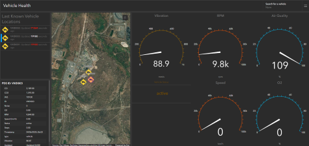
The RTIMS Use Cases Portal on TMM L9 project focuses on vehicle safety and health issues.
The following governance systems were established:
With industry requiring advanced AI functionality, the ODAP faces a closing window of opportunity. The ODAP platform requires testing using real-time data and is included in a portfolio of RTIMS projects. Other technologies with potential for data integration can be invited to provide more options and learning opportunities. The RTIMS PM and TSC should consider three options:
The South African mining sector needs a standardised Mining Data Depository and Use Cases for capacity development and innovation. This system should integrate siloed systems into a system of systems, enabling new insights, standardized work, and real-time decision-making. The ODAP should be an open, visual, and real-time business development system tailored to the sector’s needs, resulting in faster production processes and improved decision-making on key performance indicators. This readiness requires no data flow obstacles and continuous data updating.
CSIR
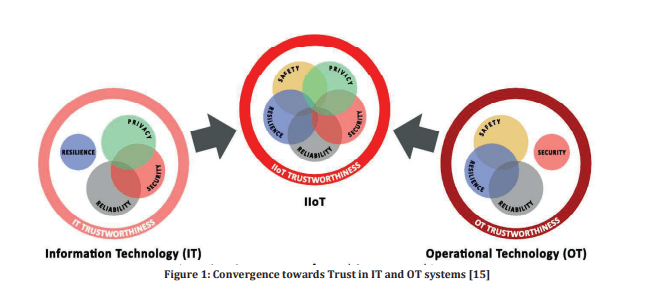
The report outlines the progress of the AIOT2 WP3 milestone, which focuses on developing a Security Maturity Model (SMM) tailored for IoT in the mining extraction process. The goal is to align South African mining edge-tier security with the Industrial Internet Reference Architecture (IIRA) Security Framework. The project, led by the CSIR Advanced Internet of Things (AIOT) group, involves collaboration with national and international mining security experts. A draft of the SMM has been completed, with ongoing refinements planned before final publication.
Problem Statement
The digitization of mining processes through IoT has introduced vulnerabilities, particularly in cyber-physical systems (CPS) used for industrial control. The mining environment faces unique challenges, such as reliance on outdated Operational Technology (OT), safety standards, and the difficulty of retrofitting security measures. These factors increase the risk of cyber-physical attacks, threatening data integrity, availability, and confidentiality. There is a need for a standardized security framework to address these challenges while complying with industry and regulatory requirements.
Methodology
The research involved:
1. State of the Art (SoTA) Evaluation: Assessing existing security technologies and standards in the South African mining sector.
2. Consultation with Experts: Engaging national and international leaders in mining security to gather insights.
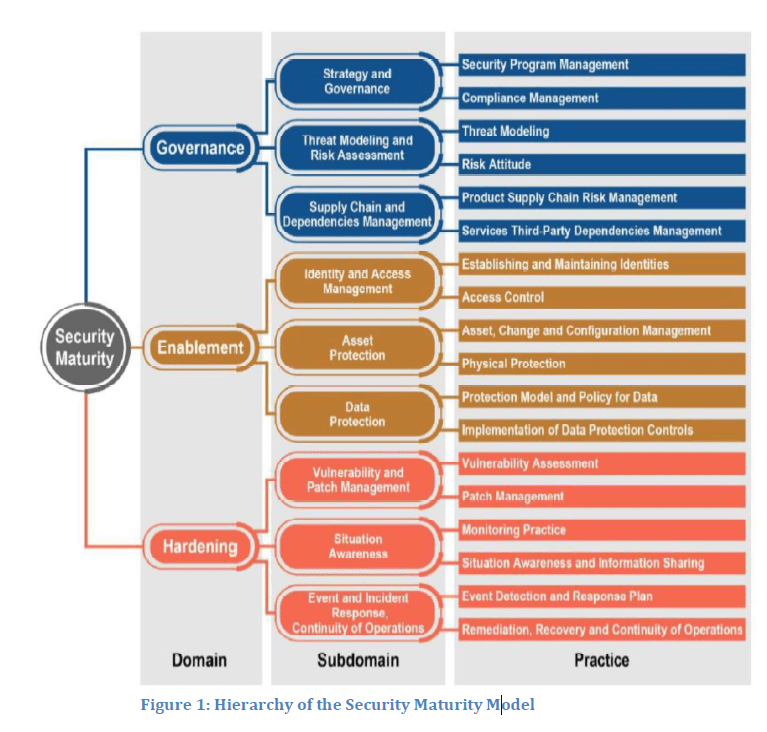
3. Development of SMM: Adapting the Industrial IoT Consortium’s (IIC) SMM to the mining context, focusing on governance, enablement, and hardening domains. The model includes four levels of comprehensiveness (Minimum, Ad hoc, Consistent, Formalized) and three scopes (General, Industry-specific, System-specific).
Findings
– The SMM provides a non-prescriptive framework for mines to assess and improve their security maturity.
– Specialized adjustments were made to address mining-specific challenges, such as safety standards and legacy OT systems.
– The model allows mines to track security improvements across technology upgrades without disclosing proprietary information.
– Limitations include the SMM’s non-certification status and the need for further refinement to address highly specialized mining needs.
Value to Mining Industry
– Standardization: Unifies security practices across mining houses nationally and internationally.
– Compliance: Helps mines align with IIRA and other international security standards.
– Risk Mitigation: Provides a pathway to enhance security against cyber-physical threats.
– Continuous Improvement: Enables mines to track and upgrade security measures over time.
Conclusion
The IoT SMM Mining Extraction Profile offers a practical tool for mines to evaluate and enhance their security maturity. While the draft is complete, further refinements and industry feedback (e.g., through workshops with SAMI Cyber experts) will ensure its applicability. The SMM is poised to play a critical role in securing IoT-enabled mining operations, balancing safety, compliance, and technological advancement.

Esri SA
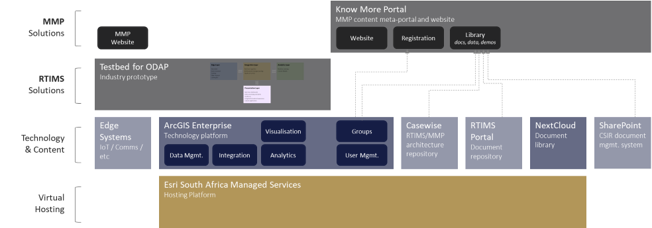
The KnowMore portal offers a central and easy-to-use solution that pulls together important information from content all over the Mandela Mining Precinct. It’s designed to make finding information much simpler by acting as a single search point for various documents and data. This means you won’t have to hunt through different systems, saving you time and effort. The portal also prevents duplicate information and is built to grow, so it can include new research and documents in the future without replacing any of our existing tools. Essentially, KnowMore improves how we share and access knowledge, helping everyone make better decisions.
The KnowMore portal is a centralized, scalable knowledge management solution built upon the existing Esri software environment hosted for the Mandela Mining Precinct (MMP). Its core technical function is to aggregate and present diverse content from the MMP’s knowledge framework and integrate with real-world use cases. Designed with an improved User Interface (UI) and User Experience (UX), it acts as a centralized search gateway to underlying content residing on various platforms, rather than duplicating information. This approach ensures interoperability with existing systems while providing a scalable architecture capable of incorporating future external knowledge sources such as research papers and models, thereby streamlining content discovery and accessibility for all stakeholders
The SAIMM Digital Transformation Conference featured a series of insightful presentations, with a strong focus on digital innovations in mining. A key highlight was Session 1, led by M. Auret (RTIMS Programme Manager, Mandela Mining Precinct), along with other notable contributions from the Mandela Mining Precinct team.
Session 1: Digital infrastructure; M. Auret – Mandela Mining Precinct RTIMS Programme
Title: Digital infrastructure
The Session provided an in-depth overview of the RTIMS initiative, a flagship programme at the Mandela Mining Precinct aimed at modernizing South Africa’s mining sector through digital transformation. Key points included:
Key insights included:
Marius emphasized that RTIMS is a critical enabler of Mining 4.0, helping South African mines remain competitive in a rapidly evolving industry.
Other notable Mandela Mining Precinct funded presentations:
Conclusion The Mandela Mining Precinct’s presentations underscored its leadership in mining digitalization, with RTIMS at the core. Session 1 set the tone for the conference, demonstrating how real-time data, AI, and IoT are revolutionizing mining efficiency and safety. Other presentations reinforced the Precinct’s holistic approach, covering digital twins, IoT, AI, and workforce development.
This work package is the engineering backbone, focusing on the selection, effective implementation, verification, and integration of RTIMS technological components. It’s about designing and building the robust technical architecture that will underpin our ability to process and deliver real-time data effectively.
Within WP2, the scope encompasses a wide array of critical elements:
A crucial aspect of WP2 is the verification of Technology Readiness Levels (TRLs). This ensures that the chosen technologies are mature and proven enough to be reliably integrated into a complex operational environment like mining in South Africa, minimizing risks and ensuring the stability of the RTIMS ecosystem.
Ultimately, WP2 is dedicated to constructing the precise technical environment that enables real-time data processing and delivery, serving as the critical foundation upon which the strategic objectives defined in WP3 can be successfully realized and value extracte
Minserv – Mineral Development & Research Services
The development of an AI Framework for SA Mining provides the South African mining sector with a crucial framework to prepare for and strategically integrate AI, particularly Generative AI, into modernization efforts. By defining the evolving relationship between human and machine in the workplace and addressing the risks and opportunities of AI adoption, this co-created framework empowers the industry to leverage innovative technologies while maintaining a human-centric approach, ultimately driving efficient and safe mining operations
The development of an AI Framework for SA Mining provides the South African mining sector with a crucial framework to prepare for and strategically integrate AI, particularly Generative AI, into modernization efforts. By defining the evolving relationship between human and machine in the workplace and addressing the risks and opportunities of AI adoption, this co-created framework empowers the industry to leverage innovative technologies while maintaining a human-centric approach, ultimately driving efficient and safe mining operations
PwC
This project aims to transform data into a dynamic and valuable asset for the mining industry by implementing a Data-as-a-Service (DaaS) model at a pilot mine. This significantly lower the barrier to entry and cost of data projects, providing a global best-practice solution tailored for South African mining. By standardizing basic mining data functionality and enabling the integration of diverse data sources, the DaaS model will prevent technological silos and expedite critical processes, such as quickly gathering information in an accident scenario. Ultimately, this approach will unlock invaluable insights through analytics, allowing data to be captured once and reused across myriad applications for exponential impact on safety, productivity, and profitability, positioning mines to proactively address future challenges and drive industry-wide innovation.
This project establishes a Data-as-a-Service (DaaS) model at a test mine, which includes developing a DevOps Delivery Methodology that will enable rapid development and operationalization of data architecture, ultimately maximizing data value for improved safety, productivity, and profitability by facilitating data reuse across myriad applications.
CSIR
The report outlines the progress of the AIOT2 WP3 milestone, which focuses on developing a Security Maturity Model (SMM) tailored for IoT in the mining extraction process. The goal is to align South African mining edge-tier security with the Industrial Internet Reference Architecture (IIRA) Security Framework. The project, led by the CSIR Advanced Internet of Things (AIOT) group, involves collaboration with national and international mining security experts. A draft of the SMM has been completed, with ongoing refinements planned before final publication.
The digitization of mining processes through IoT has introduced vulnerabilities, particularly in cyber-physical systems (CPS) used for industrial control. The mining environment faces unique challenges, such as reliance on outdated Operational Technology (OT), safety standards, and the difficulty of retrofitting security measures. These factors increase the risk of cyber-physical attacks, threatening data integrity, availability, and confidentiality. There is a need for a standardized security framework to address these challenges while complying with industry and regulatory requirements.
The research involved:
1. State of the Art (SoTA) Evaluation: Assessing existing security technologies and standards in the South African mining sector.
2. Consultation with Experts: Engaging national and international leaders in mining security to gather insights.
3. Development of SMM: Adapting the Industrial IoT Consortium’s (IIC) SMM to the mining context, focusing on governance, enablement, and hardening domains. The model includes four levels of comprehensiveness (Minimum, Ad hoc, Consistent, Formalized) and three scopes (General, Industry-specific, System-specific).
Findings
– The SMM provides a non-prescriptive framework for mines to assess and improve their security maturity.
– Specialized adjustments were made to address mining-specific challenges, such as safety standards and legacy OT systems.
– The model allows mines to track security improvements across technology upgrades without disclosing proprietary information.
– Limitations include the SMM’s non-certification status and the need for further refinement to address highly specialized mining needs.
Value to Mining Industry
– Standardization: Unifies security practices across mining houses nationally and internationally.
– Compliance: Helps mines align with IIRA and other international security standards.
– Risk Mitigation: Provides a pathway to enhance security against cyber-physical threats.
– Continuous Improvement: Enables mines to track and upgrade security measures over time.
Conclusion
The IoT SMM Mining Extraction Profile offers a practical tool for mines to evaluate and enhance their security maturity. While the draft is complete, further refinements and industry feedback (e.g., through workshops with SAMI Cyber experts) will ensure its applicability. The SMM is poised to play a critical role in securing IoT-enabled mining operations, balancing safety, compliance, and technological advancement.
CSIR
The integration of RTIMS communication and sensing technologies into the Level 9 (L9) TMM Digital Twin platform significantly enhances mining safety management. By enabling near real-time updates (every 5 seconds) from vehicle-mounted Collision Avoidance System (CAS) sensors and stope environmental sensors, the platform provides proactive hazard detection and intervention capabilities. This reduces the response time for safety managers, supporting dynamic mitigation actions such as designating no-go zones or enforcing speed limits. The system promotes compliance with recently mandated L9 safety legislation, improves situational awareness, and offers a scalable, vendor-agnostic architecture. Its demonstrated reliability and openness to integration position it well for future commercial deployment and broader adoption across the mining sector.
The RTIMS L9 use-case was implemented using a modular architecture based on the RTIMS Common Core Framework and IIRA model. CAS sensors (Booyco) were installed on moving vehicles, while stope environmental sensors (temperature, dust, smoke) were deployed in a laboratory mine-stope simulation. Data was transmitted through a six-node COFDM mesh network operating at 2.265 GHz with 10 MHz bandwidth, achieving stable 10 Mbps throughput. Sensor data was formatted using a JSON protocol and interfaced through standard Ethernet, WiFi, RS485, and CAN protocols. Real-time updates were successfully visualized on the L9 TMM Digital Twin platform, including geo-location tracking, braking, and speed data, enabling responsive safety interventions and hazard forecasting.
Esri SA; Stellenbosch University and CSIR
University of Stellenbosch in collaboration with Esri SA and CSIR developed a platform and integrated solution to significantly enhance real-time situational awareness and decision-making in mining by effectively drawing, processing, and contextualizing sensor data from IMT assets. This not only demonstrates the ability to integrate disparate systems and automate responses based on environmental states, but also provides a robust, modular, and scalable sensor-to-cloud technology stack with potential for future integration and digital twin services, ultimately maximizing the value of existing and new technologies for improved safety and operational efficiency.
The SU platform, a TRL-7 prototype, integrates data from installed IMT sensor assets via a data server, processes and contextualizes it using BASE administration shells to digitally represent physical assets with real-time state data, and feeds this into a CSIR algorithm. The platform connects to an ESRI data visualization dashboard, geographically positioning assets and displaying information from the IMT PDS system. This solution demonstrates a rapid (average 7 seconds from PDS detection to human worker’s BASE administration shell update) sensor-to-cloud data flow, enabling low-level sensor data exposure, contextualization for third-party expert applications, and automated system behavior based on integrated sensor data. The architecture emphasizes modularity and interoperability, facilitating integration of subsystems through well-defined interfaces for a complete, vertically-integrated technology stack with potential for horizontal extension.
CSIR
Composing and migrating RTIMS Enterprise Architecture data, models, and web portals from CSIR to the RTIMS application, this project facilitates seamless knowledge transfer and leverages critical information for all RTIMS stakeholders. This ensures enhanced accessibility and utilization of RTIMS EA content, ultimately streamlining information flow and supporting better decision-making within the RTIMS program.
The project involved a methodical migration of RTIMS Enterprise Architecture (EA) data, models, and web portals from CSIR’s EA application suite to the RTIMS CaseWise application and hosting platform. This process included defining the baseline data, exporting and deploying the EA model structure, performing an Extract, Transform, Load (ETL) operation for EA models and objects, and copying/publishing the web portal structure. The primary deliverables were the migrated EA model structure, EA model data, web portal publication, and a comprehensive migration report, with virtual engagements mitigating COVID-19 related access limitations.
CSIR
This review and feasibility study was done to provide a robust understanding of the regulatory landscape and technological capabilities of underground unmanned systems, both current and future. By evaluating potential use cases, system performance, costs, and social impacts, this work identify viable solutions and trial sites for optimizing safety, efficiency, and production in mining operations, ultimately informing strategic adoption and mitigating risks related to job changes and regulatory compliance
Develop a report covering the current status of technology systems, legislative/ certification issues, the state of the art products, utilisation opportunities and the future of applicable technology in hardrock mining.
Develop a report covering the current status of technology systems, legislative/ certification issues, the state of the art products, utilisation opportunities and the future of applicable technology in hardrock mining.
Stellenbosch University/ Cybarete
The project aimed to enhance situational awareness, decision-making, and operational resilience by integrating diverse partner technologies into a cohesive, human-centric system. A significant demonstration use case was developed in the SIMLab (Simulated Laboratory) to showcase the platform’s capabilities in a realistic mining scenario, specifically a ‘Stoping Activity’. Furthermore, a comprehensive strategy was formulated for deploying the BASE platform to a real test mine.
Key Findings: The BASE Platform
1. Holonic & Distributed Architecture: The BASE platform is built on a holonic systems design principle, where autonomous software units (‘holons’ or ‘BASE agents’) represent physical resources (e.g., sensors, miners, equipment) and activities (e.g., a stoping shift). These agents collaborate in a distributed network across multiple hardware devices (‘BHives’), making the system inherently resilient, fault-tolerant, and scalable.
2. Successful Technology Integration: The platform successfully integrated technologies from multiple RTIMS partners in the SIMLAB, including:
3. Smart-Connected Mineworker: A key innovation demonstrated was the Mineworker BASE Agent. This digital representation of a miner uses custom plugins to monitor individual heat stress and thermal comfort in real-time by analyzing environmental data (temperature, humidity, air velocity) and calculating metrics like WBGT and THI. This enables proactive health and safety interventions.
4. Proven Resilience: The demonstration validated the platform’s core strength: maintaining functionality during network disruptions. When a BHive was disconnected from the network (simulating a tunnel collapse), the agents on that device continued to operate autonomously, monitoring their local environment and coordinating tasks, and seamlessly rejoined the network once connectivity was restored.
5. Comprehensive Deployment Strategy: The project and report provides a detailed, step-by-step strategy for deploying BASE BHives in a real mine. This includes:
Value to the Mining Industry
1. Interoperability: The BASE platform acts as a vendor-agnostic ‘glue’, integrating different technologies from various OEMs into a single, coherent system, breaking down data silos.
2. Enhanced Safety: Real-time, individualized health monitoring of miners (e.g., heat stress) allows for proactive safety measures, moving beyond compliance to genuinely protecting workers.
3. Operational Resilience: Its distributed nature ensures that critical monitoring and control functions continue even during infrastructure failures, a common challenge in underground mines.
4. Improved Decision-Making: By contextualizing data at the edge and providing it to miners, supervisors, and remote systems (like Digital Twin and Esri), it enables faster, more informed decisions across the operation.
5. Foundation for Future Innovation: The platform provides a standardized framework upon which new technologies and applications can be built, future-proofing mining operations.
Conclusion
The SU BASE platform has been successfully demonstrated as a robust, resilient, and highly effective integration platform for creating a smart-connected mining environment. It successfully transitions from a theoretical concept to a practically validated system in the SIMLAB. The provided deployment strategy offers a clear roadmap for implementing this technology in real-world mining operations, with the potential to significantly improve safety, interoperability, and operational efficiency in the South African mining sector. The project concludes that the platform is ready for the next phase: pilot deployment in a test mine.
Test Mine – GPS Coordinates Over Leaky Feeder in an Underground Mine
Ramjack
The project aimed to enhance safety and efficiency in underground mining by enabling real-time tracking of personnel, vehicles, and assets. The system would improve emergency response, reduce fatigue-related incidents through SmartCap monitoring, and optimize operational workflows. By integrating GPS simulation, Wi-Fi mesh networking, and fatigue detection, the project sought to create a comprehensive solution for modern mining challenges.
The project involved installing 600 meters of UHF leaky feeder cable to broadcast GPS signals underground, supported by a Syntony Subwave system for coordinate simulation. Five Rajant Wi-Fi access points formed a mesh network to transmit data from SmartCap fatigue monitors and other sensors. The SmartCap system included LifeDisplays mounted in vehicles and LifeBands worn by workers to track fatigue levels. However, the system’s full functionality depended on a stable fibre backbone, which experienced repeated failures, delaying configuration and commissioning. Despite these setbacks, the hardware installation was completed, demonstrating the feasibility of the RTIMS solution once connectivity issues are resolved.
Test Mine – Wireless sensor integration
Probe IMT
This project aimed to deliver and implement a comprehensive, integrated 4IR. Connected Mine solution, focusing on key areas such as underground infrastructure, communication networks, and environmental monitoring systems. The implementation of the 4IR Connected Mine solution delivers significant improvements in underground mining operations by enhancing safety, environmental monitoring, and operational efficiency. The deployment of a Private 5G network enables ultra-reliable, low-latency communication that reduces dependence on traditional cabling. This wireless infrastructure supports real-time tracking of workers and vehicles, boosts situational awareness through wearables, and integrates with proximity detection and collision avoidance systems to prevent accidents. Advanced environmental sensors monitor gas, dust, diesel particulates, and noise, ensuring early hazard detection. Together, these technologies support predictive maintenance, data-driven decision-making, and safer mining practices.
The system consists of a Private 5G network infrastructure that links underground access points and IoT edge servers, enabling real-time data transmission from environmental sensors and safety devices. Key technologies include the M3SH FleetPRO system for vehicle proximity detection, wearable safety devices for worker tracking, and multiple environmental sensors (P50, D52, DPM50, S50, and NM20) for monitoring gases, particulates, smoke, and noise. Devices were installed at regular intervals underground, forming a stable network. Data is processed at local edge servers and integrated with SCADA for centralized monitoring. The modular and scalable design allows for easy expansion, while compliance with SANS and IEC standards ensures safe operation in hazardous environments.
CSIR and Impala Bafokeng
The project successfully demonstrated a robust, scalable solution for in-stope communications in underground mining, significantly advancing the goal of enabling Cyber-Physical Systems (CPS) to improve productivity and safety. By integrating Wi-Fi 6 and Thread network technologies, the system ensures high-speed data transfer, reliable connectivity, and long-term, low-power sensor operation even in harsh underground conditions. The solution supports real-time monitoring, mobility, and interoperability using commercial off-the-shelf components, making it both cost-effective and easy to maintain. This innovation enables the mining sector to move beyond traditional SCADA systems toward intelligent, interconnected mining operations.
The solution comprises two key technologies: Wi-Fi 6 for high-speed, real-time data streaming and 10BaseT1L Ethernet over twisted pair cabling, and Thread, a low-power, low-bandwidth mesh protocol for long-term monitoring via battery-powered sensors. The In-Stope Access Point (ISAP) device, developed by CSIR, integrates Wi-Fi 6 and Ethernet to provide underground connectivity with up to 10 Mbps throughput and sub-10 ms latency, tested at distances up to 100m. The Thread network used disposable, Open Thread nodes to create a two-hop mesh covering 150m, achieving consistent 20ms latency and seamless handovers. The system was field-tested at Impala Bafokeng North Shaft (Maseve Testmine), demonstrating strong performance despite challenges with fibre infrastructure, and validated as suitable for future commercial deployment.
CSIR
The project focuses on the feasibility of testing an Underground Stope-Face Communication System (USFCS) using Coded Orthogonal Frequency Division Multiplexing (COFDM) technology. The tests were conducted in two phases: a controlled laboratory environment at the CSIR and an operational underground hard rock mine (Glencore Waterval East). The objective was to evaluate COFDM’s capability to transmit and receive near real-time video, voice, and data in both line-of-sight (LOS) and non-line-of-sight (NLOS) conditions typical of a mining environment.
The system utilized DTC DK1220 Phase 4 Robust Mesh Node radios operating in the L-Band (1.395 GHz) and was tested for its ability to maintain communication over distances of up to 100m LOS and 50m NLOS, as per the initial use case requirements.
Findings
1. Laboratory Tests (CSIR):
2. Underground Mine Tests (Glencore Waterval East):
Value to the Mining Industry
The successful demonstration of COFDM-based communication provides significant value to the mining industry:
Conclusion
The feasibility tests confirm that COFDM is a suitable and effective technological choice for the core requirements of the Underground Stope-Face Communication System (USFCS). It successfully demonstrated the ability to transmit voice and video in both LOS and challenging NLOS conditions within a hard rock mine.
In essence, COFDM provides a strong technical foundation for achieving the critical communication capabilities needed to enhance safety and efficiency in modern mining operations.
CSIR; WinWin International; Product1; Logtra
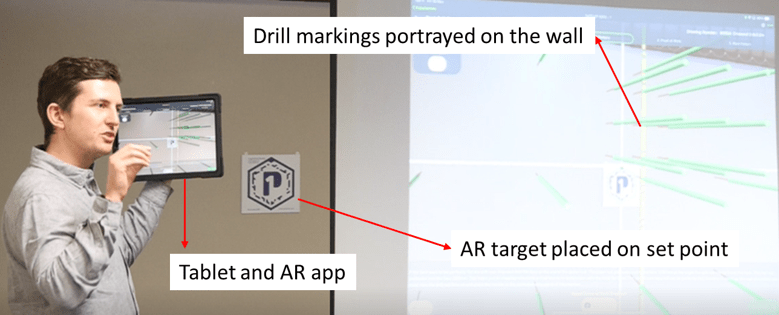
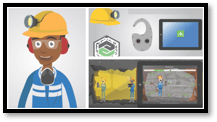
This project demonstrates the transformative potential of augmented reality (AR) in modernizing training for rock drill operators (RDOs) and miners in gold and platinum group metal operations. By developing and piloting a simulated AR solution, the initiative supports upskilling through immersive, just-in-time learning experiences that reflect real underground conditions. The AR system enables training directly at the stope—without the need for network or power infrastructure—offering last-mile intelligence, automatic safety monitoring, and optimized shift handovers. Integrated with SAMERDI research and designed for broad industry use, the solution empowers mines to enhance safety, productivity, and workforce readiness through accessible, scalable digital training tools..
The AR training solution for rock drill operators (RDOs) and miners was developed under COVID-19 constraints, relying on virtual collaboration and simulation-based piloting. Due to limited access to operational mines, the solution was demonstrated in controlled environments, including a virtual exhibition at the University of Johannesburg’s mine simulator. The study revealed that digital training in mining cannot follow a one-size-fits-all model due to varying modernization levels, infrastructure, and workforce readiness across mines. The AR solution supports blended learning—combining classroom, on-the-job, and digital methods—and includes multilingual animated content, facilitator and delegate guides, SOPs, and training videos. While digital tools enhance refresher and remote learning, physical training remains essential. The solution is transferable to industry via the Mandela Mining Precinct, with licensing provisions and customization options available through the original developer. Future implementation must consider digital literacy, infrastructure, financial investment, and alignment with mine-specific training strategies.
RIIS
Desktop study around convergence and impacts of Environmental, Social and Governance (ESG), Digitalisation (DX) and Circular Economy (CE) in the Mining Sector.
Focuses on the convergence of ESG, CE practices, and DX within the South African mining sector. Understand the current progression of South African mining companies towards their ESG, CE, and DX goals.
Capability assessments employed to measure the maturity of ESG, CE, and DX implementation within mining companies.
Solution / Innovation
Reporting frameworks used to track progress in ESG, CE, and DX, ESG, CE, and DX maturity assessment template
In any transformative initiative, understanding the “why and how” is crucial for success. This is precisely the purpose of Work Package 3 (WP3): Strategic Co-Creation and Value Extraction. This work package focuses on ensuring that our efforts in Real-Time Information Management Strategies (RTIMS) not only deliver technological solutions but also generate clear business outcomes and demonstrable value.
At its core, Strategic Co-Creation and Value Extraction is about fostering powerful partnerships. It involves bringing together diverse stakeholders, including mining companies, technology providers, researchers, and other key players, to collaboratively identify innovative and sustainable approaches to real-time information management. This collaborative environment is essential for developing solutions that are not just technically sound, but also deeply relevant and impactful to the mining industry.
The process within WP3 is structured to translate the potential of RTIMS data into tangible business results. This includes several key activities:
Ultimately, WP3 ensures that the deployment of RTIMS is not just a technological implementation but a strategic endeavor focused on extracting maximum value and driving the desired business transformation.
Digital Twin Consulting Services
This project aimed at increasing awareness of RTIMS developments among South African miners and mining technology developers, while generating excitement around the value of data and the potential of RTIMS solutions.
Additionally, the campaign sought to generate leads within the target market and connect RTIMS solution partners to promote adoption and uptake. Our strategy employed a multi-phase approach that intertwines the awareness and engagement phases, seamlessly building interest and interaction before ultimately driving conversion
The campaign demonstrated sustained visibility, strong audience interaction, and effective content strategies, reinforcing RTIMS as a thought leader in digital mining innovations.
Solution / Innovation
The campaign generated 2,301 impressions, 589 engagements, and 507 clicks across three posts.
The highest-performing post was the ODAP carousel, which drove significant engagement and interest.
RIIS
Desktop study around convergence and impacts of Environmental, Social and Governance (ESG), Digitalisation (DX) and Circular Economy (CE) in the Mining Secto
Problem / opportunity
Focuses on the convergence of ESG, CE practices, and DX within the South African mining sector. Understand the current progression of South African mining companies towards their ESG, CE, and DX goals.
Capability assessments employed to measure the maturity of ESG, CE, and DX implementation within mining companies.
Solution / Innovation
Reporting frameworks used to track progress in ESG, CE, and DX, ESG, CE, and DX maturity assessment template
RIIS & Sarraounia
Desktop study for a digitalisation roadmap required for the adoption of smart wearables to support OHS in South Africa’s mining industry from traditional to modern mining according to three pillars:
1) Technological Advancements and Smart Wearables;
2) Digital and OHS Maturity; and
3) Policy and Regulation.
Develop a roadmap to represent the digital transformation required for the adoption of smart wearables to support occupational health and safety (OHS) in South Africa’s mining industry, particularly focusing on the gold and platinum sectors.
The objectives will contribute to aligning the SAMI to the Fourth Industrial Revolution, formulating a framework for understanding the impact of DX on OHS (including worker and regulator perspectives on DX and OHS new technologies such as smart wearables; the interface between DX, modernised work processes and OHS; ethical and reporting opportunities and dilemmas, legal compliance and OHS), as well as enabling modernisation of the SAMI
The “DX BC Simulation Gaming Engine” is a Technology Readiness Level 7 (TRL 7) application prototype developed using the Unity platform for training and orientation in mining operations. It provides an immersive 3D environment simulating in-stope processes like drilling, face cleaning, and blasting, relevant to Real-Time Information Management Systems (RTIMS) technology. The game, modeled on a “Miner’s” daily routine, focuses on five key operational processes (Travel-In Times, Safety, Drilling, Cleaning, Blast Quality) and utilizes simulated data sets across three dashboard types (Monitor & Control, Analyse & Improve, Overall Performance) to track KPIs and profitability. Users can invest in RTIMS technologies to unlock datasets and improve performance, with the primary objective of maximizing mine profitability through data-driven decision-making.
CSIR, IIC and DTC
The report outlines the progress of the AIOT2 WP3 milestone, which focuses on developing a Security Maturity Model (SMM) tailored for IoT in the mining extraction process. The goal is to align South African mining edge-tier security with the Industrial Internet Reference Architecture (IIRA) Security Framework. The project, led by the CSIR Advanced Internet of Things (AIOT) group, involves collaboration with national and international mining security experts. A draft of the SMM has been completed, with ongoing refinements planned before final publication
The digitization of mining processes through IoT has introduced vulnerabilities, particularly in cyber-physical systems (CPS) used for industrial control. The mining environment faces unique challenges, such as reliance on outdated Operational Technology (OT), safety standards, and the difficulty of retrofitting security measures. These factors increase the risk of cyber-physical attacks, threatening data integrity, availability, and confidentiality. There is a need for a standardized security framework to address these challenges while complying with industry and regulatory requirements.
Methodology
The research involved:
Findings
– The SMM provides a non-prescriptive framework for mines to assess and improve their security maturity.
– Specialized adjustments were made to address mining-specific challenges, such as safety standards and legacy OT systems.
– The model allows mines to track security improvements across technology upgrades without disclosing proprietary information.
– Limitations include the SMM’s non-certification status and the need for further refinement to address highly specialized mining needs.
Value to Mining Industry
– Standardization: Unifies security practices across mining houses nationally and internationally.
– Compliance: Helps mines align with IIRA and other international security standards.
– Risk Mitigation: Provides a pathway to enhance security against cyber-physical threats.
– Continuous Improvement: Enables mines to track and upgrade security measures over time.
Conclusion
The IoT SMM Mining Extraction Profile offers a practical tool for mines to evaluate and enhance their security maturity. While the draft is complete, further refinements and industry feedback (e.g., through workshops with SAMI Cyber experts) will ensure its applicability. The SMM is poised to play a critical role in securing IoT-enabled mining operations, balancing safety, compliance, and technological advancement.
Miniserv – Mineral Development & Research Services
MMP, PwC and Minerals Council South Africa
The state of digital transformation in the South African mining industry
The state of digital transformation in the South African mining industry: Ten insights into 4IR 2023 report is now available. The report provides new insights, validates existing insights from the previous report, and articulates the mining industry’s commitment to using digitalisation and technology for the ultimate creation of business value in the mining sector.
The Minerals Council South Africa, in collaboration with PwC and the Mandela Mining Precinct, launched its first study into ‘the State of Digitalisation and 4IR in SA Mining’, in 2020. The study’s findings were summarised in ten insights. These insights were globally well received and disseminated.
The 2020 Study focused on digital transformation and 4IR readiness. The 2022 study was expanded to include ESG aspects into the study to bring the industry in line with what is expected of companies in the modern world.
Leading Edge Only (LEO)
The project focuses on the Innovation Network and Management by Leading Edge Only (LEO).
The primary aim was to establish a global knowledge transfer mechanism by setting up an innovation network for the Mandela Mining Precinct’s RTIMS programme. This was achieved by subscribing to LEO’s online innovation management platform.
The key outcome was that the RTIMS (MMP) was granted a subscription to LEO’s online platform. This subscription allows the programme to:
a global community of innovators. This tool is intended to help source solutions for specific mining industry challenges by facilitating collaboration and co-creation
The project was completed, providing the RTIMS programme with a structured digital platform to connect with a global community of innovators. This tool is intended to help source solutions for specific mining industry challenges by facilitating collaboration and co-creation.
SAIMM Digital Transformation Conference Programme
The SAIMM Digital Transformation Conference featured a series of insightful presentations, with a strong focus on digital innovations in mining. A key highlight was Session 1, led by M. Auret (RTIMS Programme Manager, Mandela Mining Precinct), along with other notable contributions from the Mandela Mining Precinct team.
The Session provided an in-depth overview of the RTIMS initiative, a flagship programme at the Mandela Mining Precinct aimed at modernizing South Africa’s mining sector through digital transformation.
Key insights included:
Marius emphasized that RTIMS is a critical enabler of Mining 4.0, helping South African mines remain competitive in a rapidly evolving industry.
Other notable Mandela Mining Precinct funded presentations:
1- Digital Twins for Mine Optimization
– Explored how virtual replicas of mining systems improve planning and real-time adjustments.
2 – IoT and Sensor Networks in Underground Mining
– Highlighted advancements in real-time environmental monitoring (gas, temperature, stability) for safer operations.
3 – AI-Driven Mineral Processing
– Discussed how machine learning models optimize ore sorting and processing efficiency.
4 – Workforce Upskilling for Digital Mining
– Addressed the need for training programs to prepare miners for new technologies like RTIMS and automation.
The Mandela Mining Precinct’s presentations underscored its leadership in mining digitalization, with RTIMS at the core. Session 1 set the tone for the conference, demonstrating how real-time data, AI, and IoT are revolutionizing mining efficiency and safety. Other presentations reinforced the Precinct’s holistic approach, covering digital twins, IoT, AI, and workforce development.
As the Programme Manager for Real-Time Information Management Systems in the South African Mining, Extraction Research, Development and Innovation strategy, at the Mandela Mining Precinct, is responsible for research, development, and innovation for the Industrial Internet of Things and Smart Connected Systems, for the Mining Industry
ICT, Digitalisation, Business Sustainability, Project Management
The Programme Manager for Real-Time Information Management Systems is responsible for research, development, and innovation for the Industrial Internet of Things and Smart Connected Systems, for the Mining Industry
As the Programme Manager: Successful Applications of Technology Centred Around People (SATCAP), Sherin is responsible for leading research on understanding the effects and impacts of mining modernisation on people.
Expertise
Learning and Development
sramparsad@mandelaminingprecinct.org.za
Description
Sherin holds a Doctorate Degree in Education Management, with various other professional qualifications in her field, and is a registered Master Learning and Development specialist.
She is passionate about sustaining the mining sector through growing and developing leaders in mining, and in her own time, is a GIBS Associate – an MBA supervisor, coach and examiner for the Gordan Institute of Business Science, and is a visiting Adjunct Professor for the Wits Mining Institute, at the University of Witwatersrand.
As the Projects Administrator, Tshepo works closely with the Programme Managers to ensure all project deliverables including administrative requirements are met.
Project Management, Administration, Research
Tshepo holds a Master of Urban Studies, Urban Politics and Governance degree from the University of the Witwatersrand. He is a registered Candidate Planner with SACPLAN. Tshepo is passionate about research, development and innovation. His interests are people in mining, mining technologies, governance, project management, public policy analysis, spatial planning, and policy formulation.
 Optimized by Seraphinite Accelerator